Good Vibes Retreat
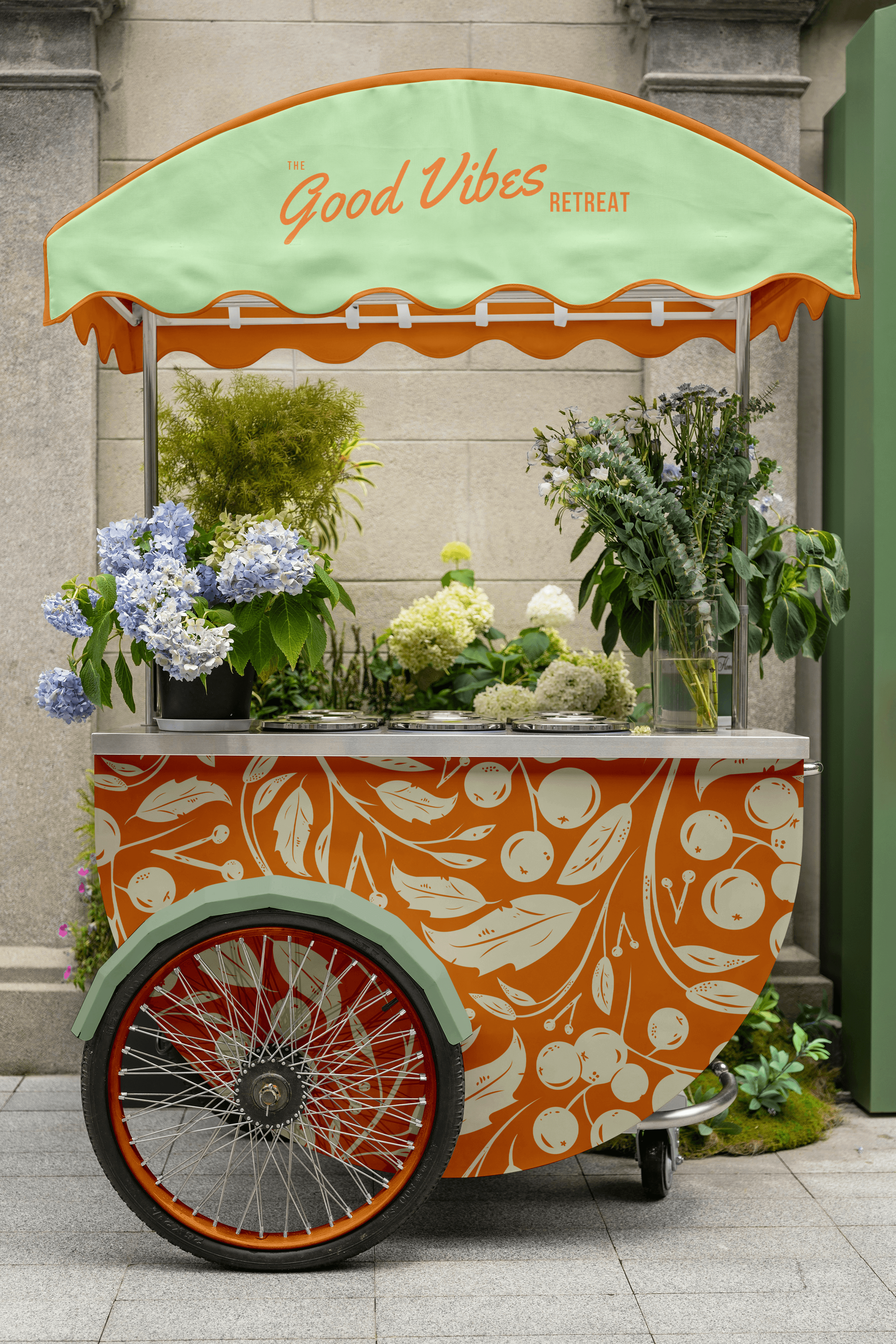
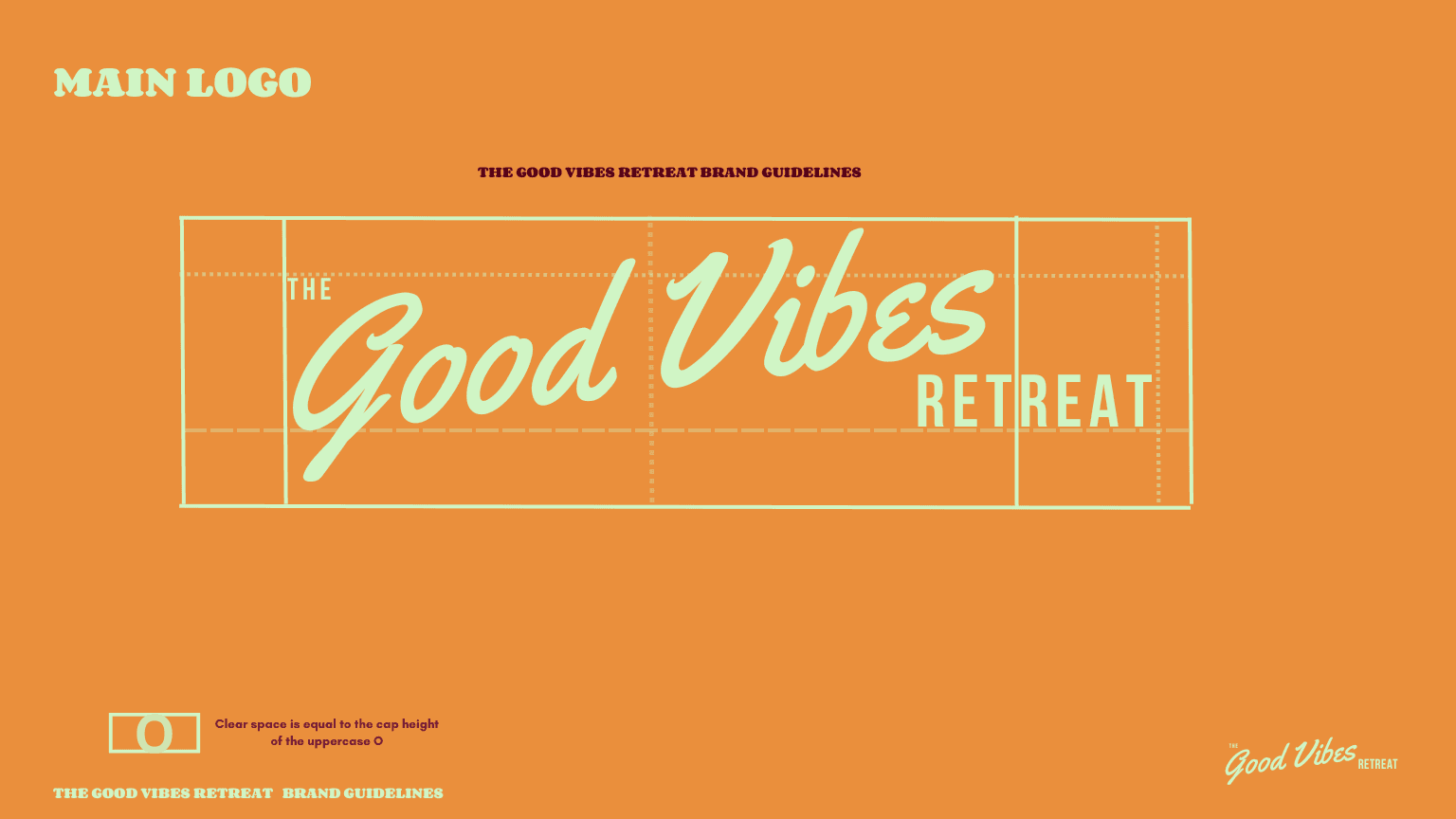
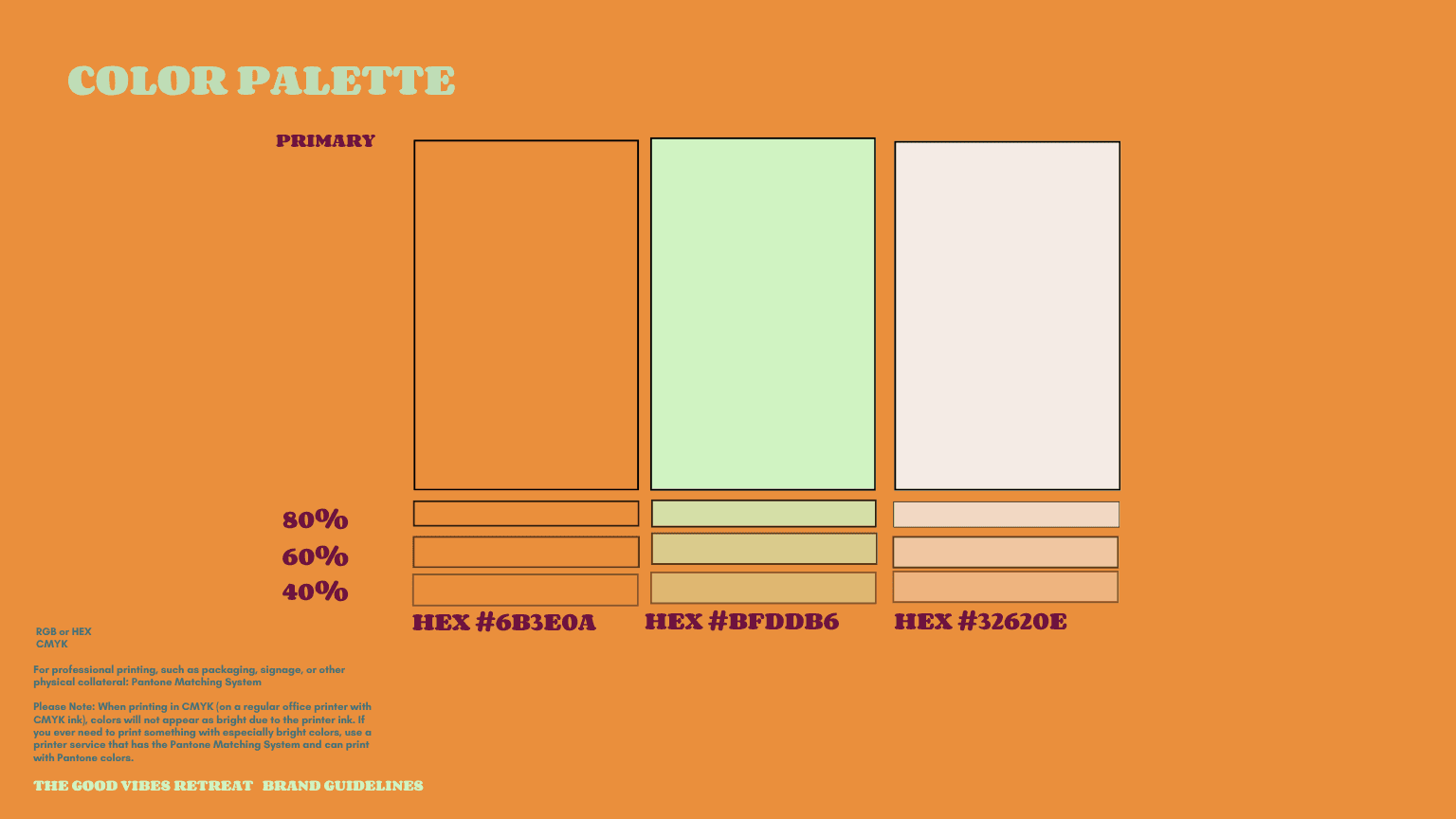
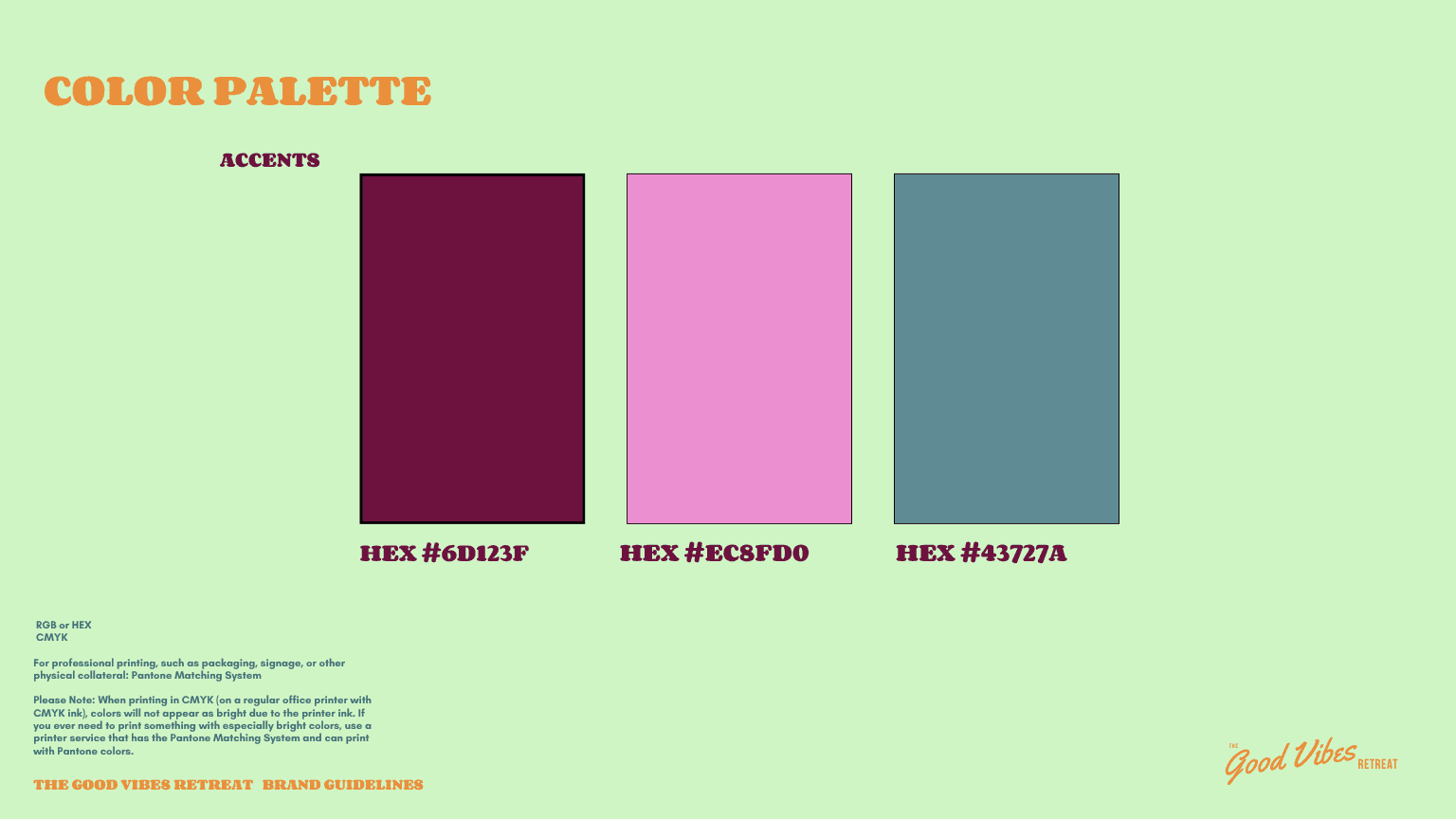
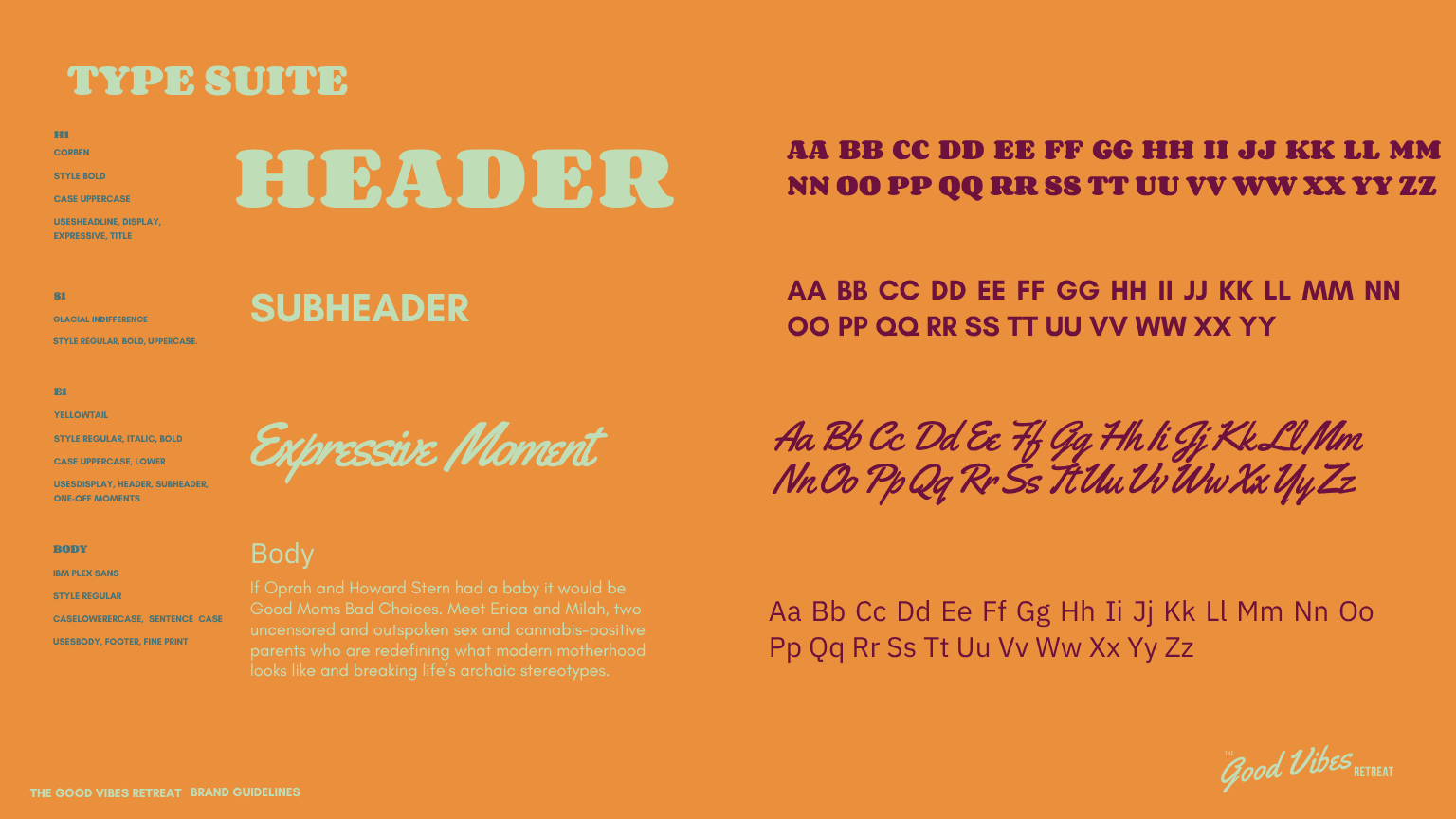
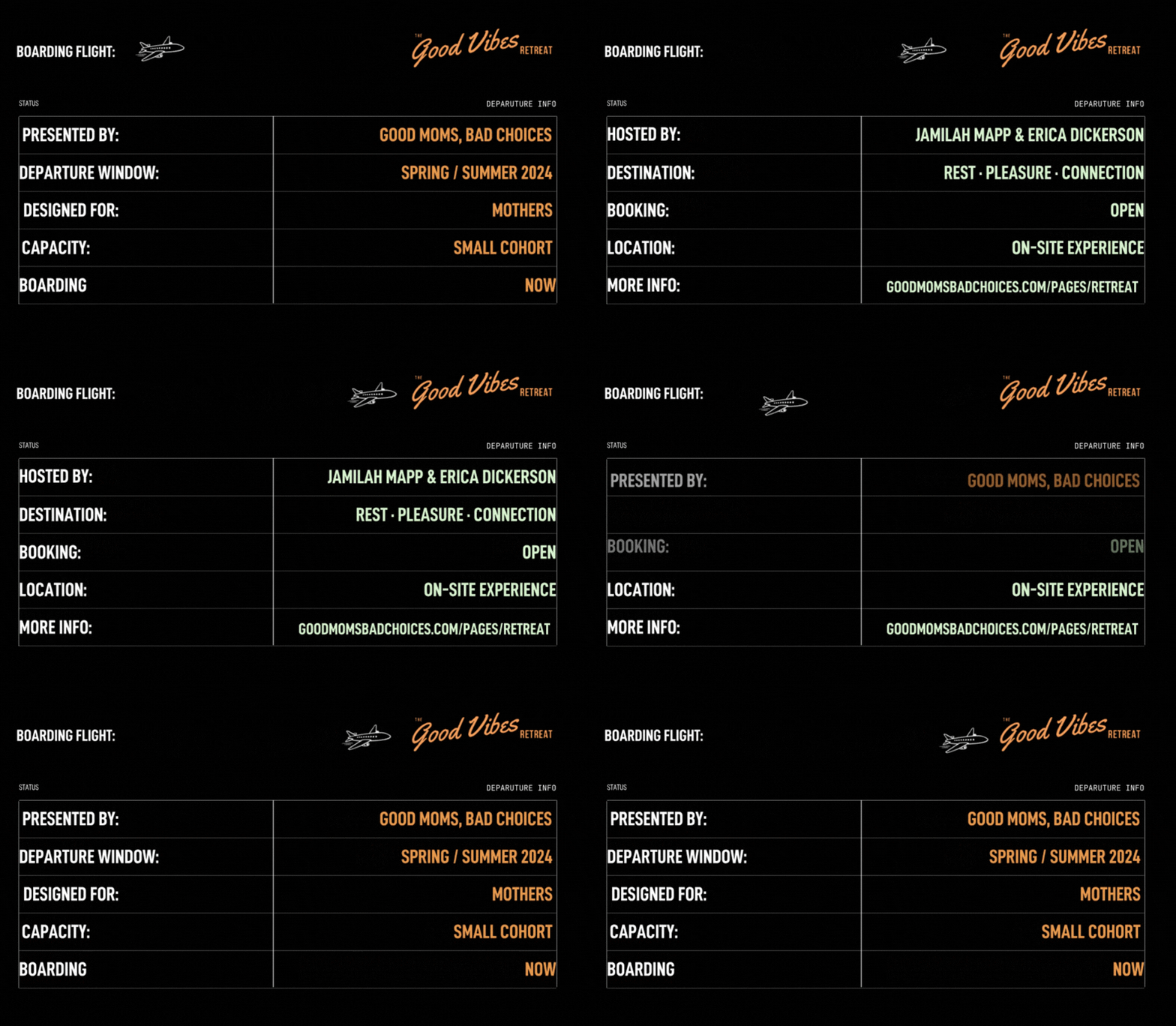
Good Vibes Retreat was developed as an extension of Good Moms Bad Choices, conceived as a temporary environment for mothers navigating the demands of care, labor, and constant negotiation. Rather than positioning wellness as an escape, the project approached it as a structured pause, offering space for rest, connection, and affirmation within a community defined by shared experience. The core challenge was to build an identity that acknowledged the realities of caregiving while supporting pleasure and personal agency in a way that felt culturally grounded rather than generic. The design direction was shaped by a central question: how can a wellness environment communicate softness and emotional grounding without losing a sense of strength, humor, and self-possession? For many mothers, rest is conditional, shaped by expectation and judgment. The identity reframes rest as self-directed and intentional, aligning with the voice of Good Moms Bad Choices and the lived experiences of its audience. I led the full creative direction and visual identity, developing a flexible system designed to function across digital, print, and on-site applications. Rather than relying on a single mark, the identity operates as a system of elements, including a bright, refined color palette, typographic pairings, accent graphics, and custom symbols. These components create a visual language that can shift in tone while remaining cohesive, supporting both intimacy and clarity. A key layer of the visual approach drew from the language of travel and departure. References to boarding passes, itineraries, and airport signage informed both layout and motion, positioning the retreat as a form of intentional movement rather than escape. Motion design emphasized transition, rhythm, and directional flow, reinforcing the idea of entering a different pace and state of mind. This framework extended across digital and physical touchpoints, creating a sense of anticipation, progression, and arrival.
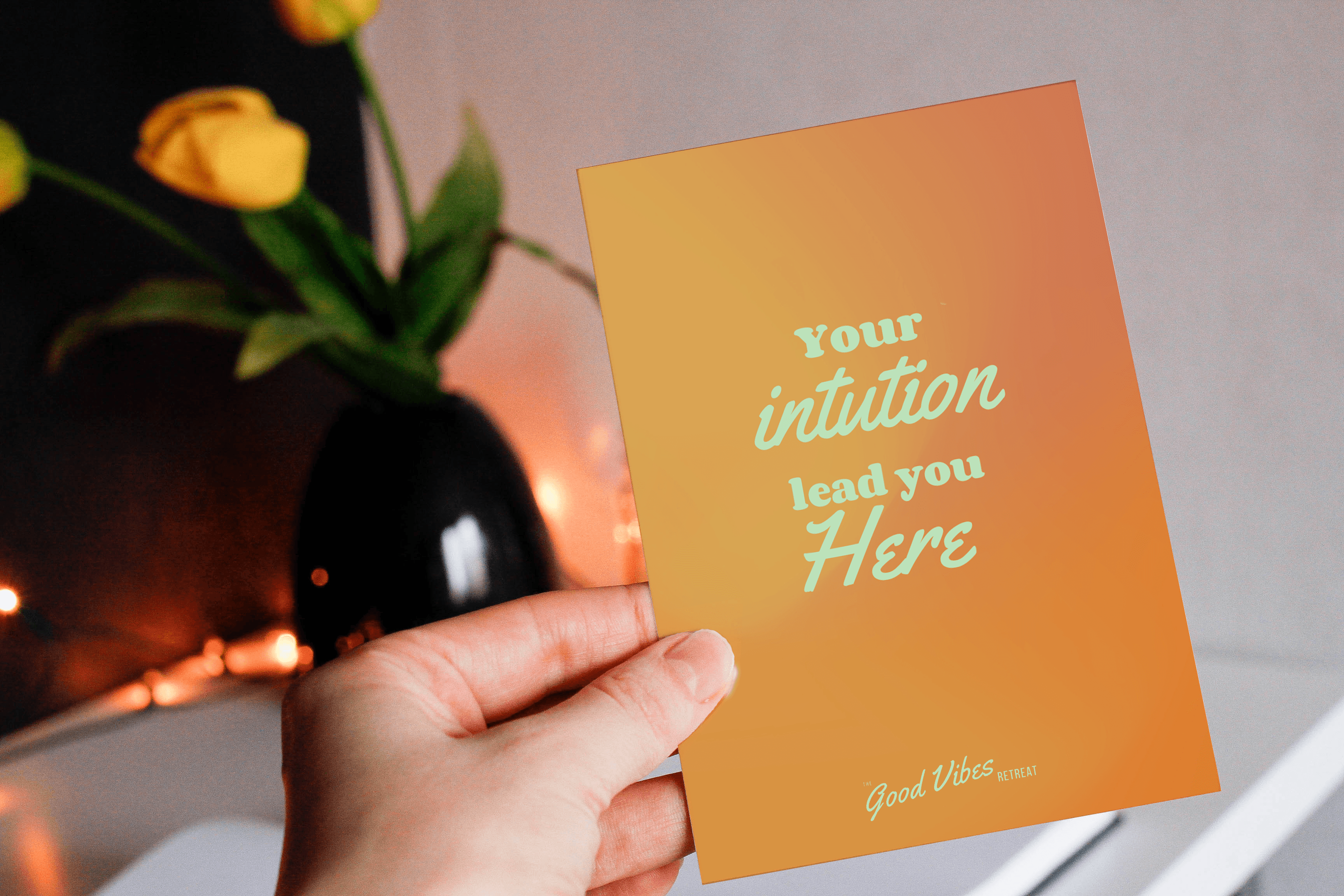
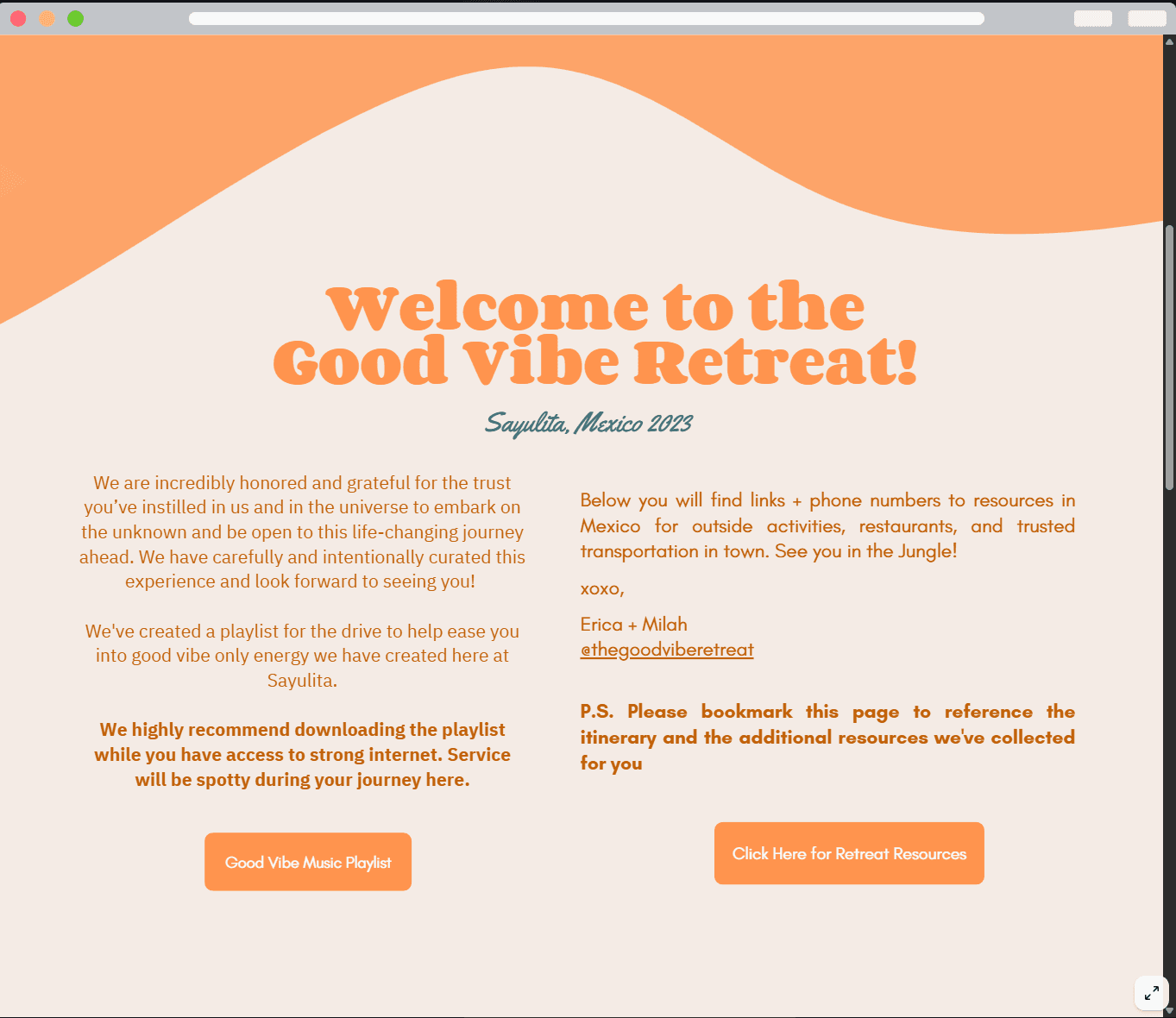
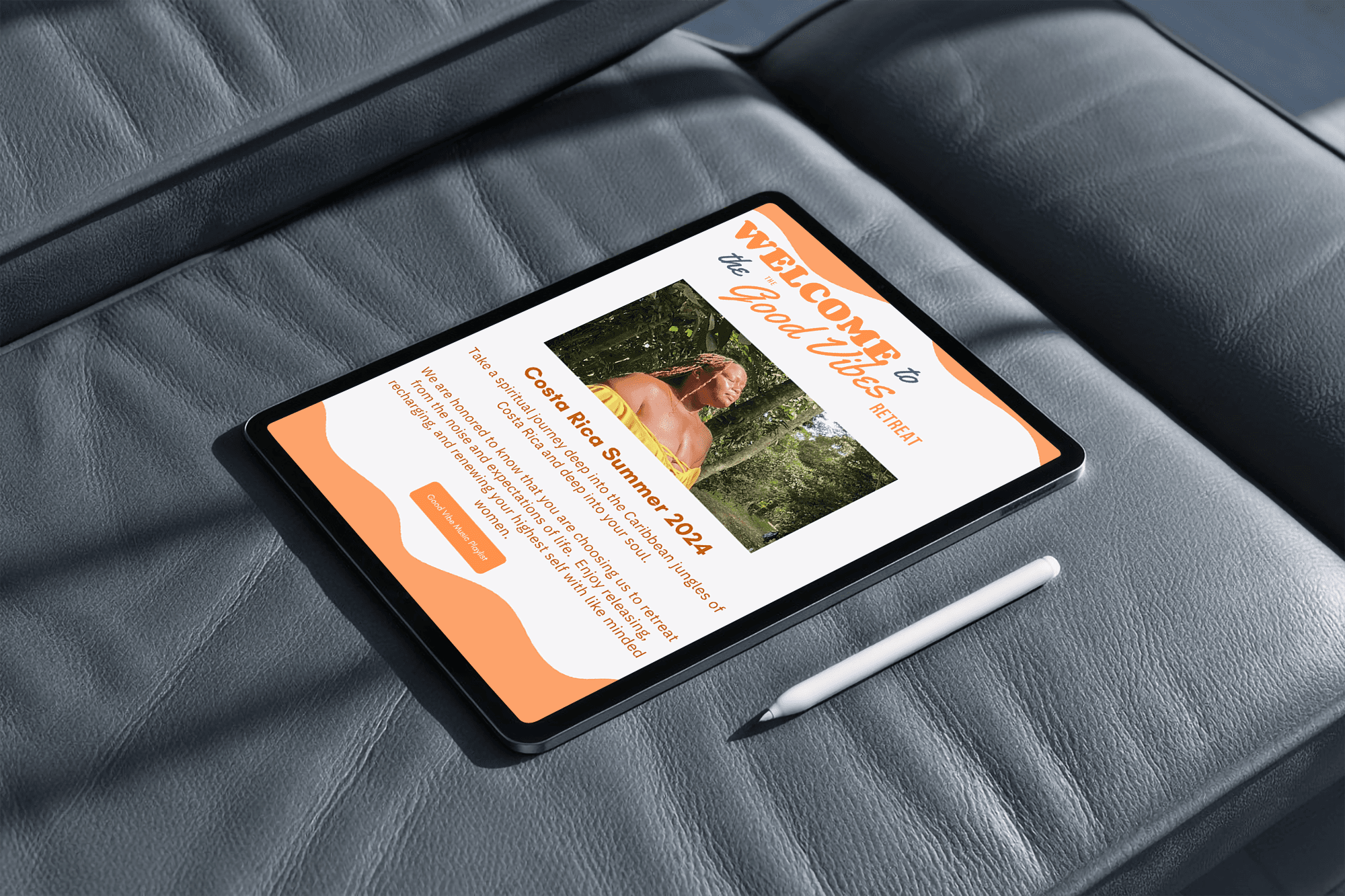
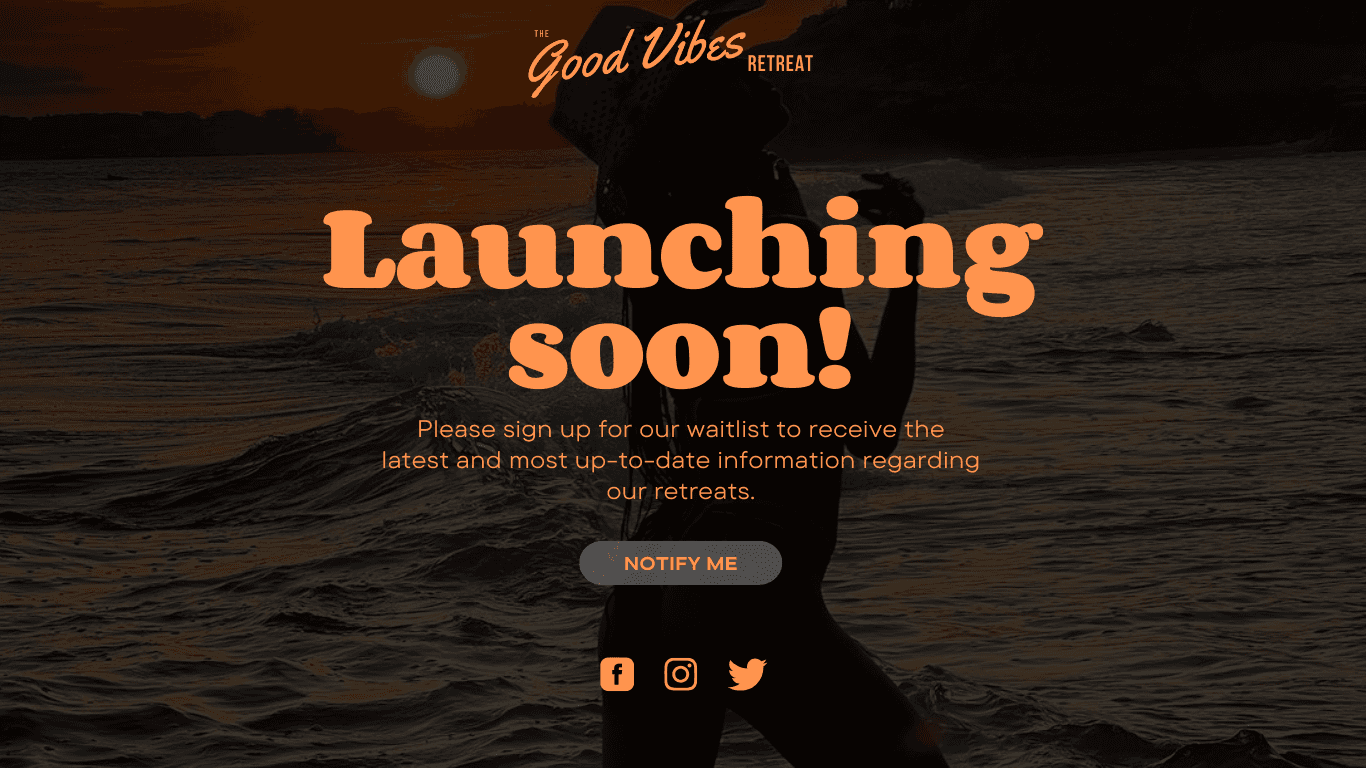
Audience orientation and emotional pacing were central to the experience. The landing page established tone through clarity and invitation, while a fully designed welcome document and illustrated itinerary guided participants through the retreat structure. These materials functioned as tools of reassurance, reducing friction and allowing participants to arrive feeling prepared and supported. To extend the experience beyond the event, I designed a 30-card printed affirmation deck as both a ritual object and a personal keepsake. The language balances grounding with humor and boundary-setting, reflecting the tone of the community and resisting the neutrality often associated with wellness branding. The visual system supports this balance through tactile and graphic choices that convey both warmth and authority. The final outcome operates as an integrated brand ecosystem. Across digital platforms, social content, and physical materials, the identity maintains coherence while allowing for variation and individual interpretation. The system supported both engagement leading up to the retreat and the on-site experience itself, establishing a consistent and culturally specific presence. At its core, the project positions wellness as an act of agency and collective care. Through design, the retreat frames rest as intentional, affirmation as self-defined, and community as an active structure of support.


Pilecki Institute USA


Pilecki Institute USA
For its first U.S. location, the Pilecki Institute needed an identity that could translate its rich European legacy into a clear, contemporary presence. The result is a system shaped by narrative, materiality, and accessible design, creating an environment where history becomes approachable, relevant, and alive for New York audiences.
Pilecki Institute USA
For its first U.S. location, the Pilecki Institute needed an identity that could translate its rich European legacy into a clear, contemporary presence. The result is a system shaped by narrative, materiality, and accessible design, creating an environment where history becomes approachable, relevant, and alive for New York audiences.