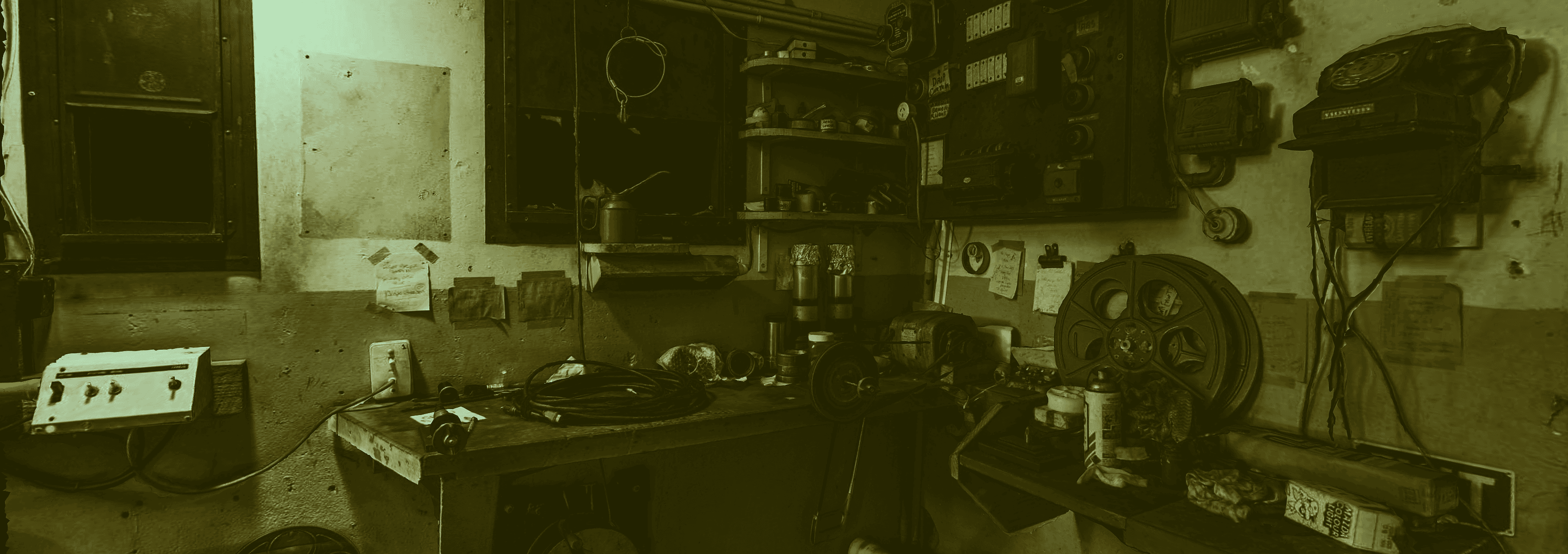
A Living Archive of Diasporic Memory
Client:
Parsons, School of Design
Special Thanks:
Expand for Full List
CHALLENGE
STRATEGY
IDENTITY
APPLICATION
The histories and contributors of the Négritude movement are frequently condensed within institutional and cultural narratives, limiting how figures such as Aimé Césaire, Suzanne Césaire, and Léopold Sédar Senghor are understood beyond fixed historical framing. The project asked how a digital system could preserve complexity, contradiction, and cultural agency without replicating the hierarchy of traditional archival presentation.
Art Direction
Web Design
Research
Outcome
Translated funded research and fieldwork into a functional, non-linear digital archive system that structures how users access and interpret cultural material.
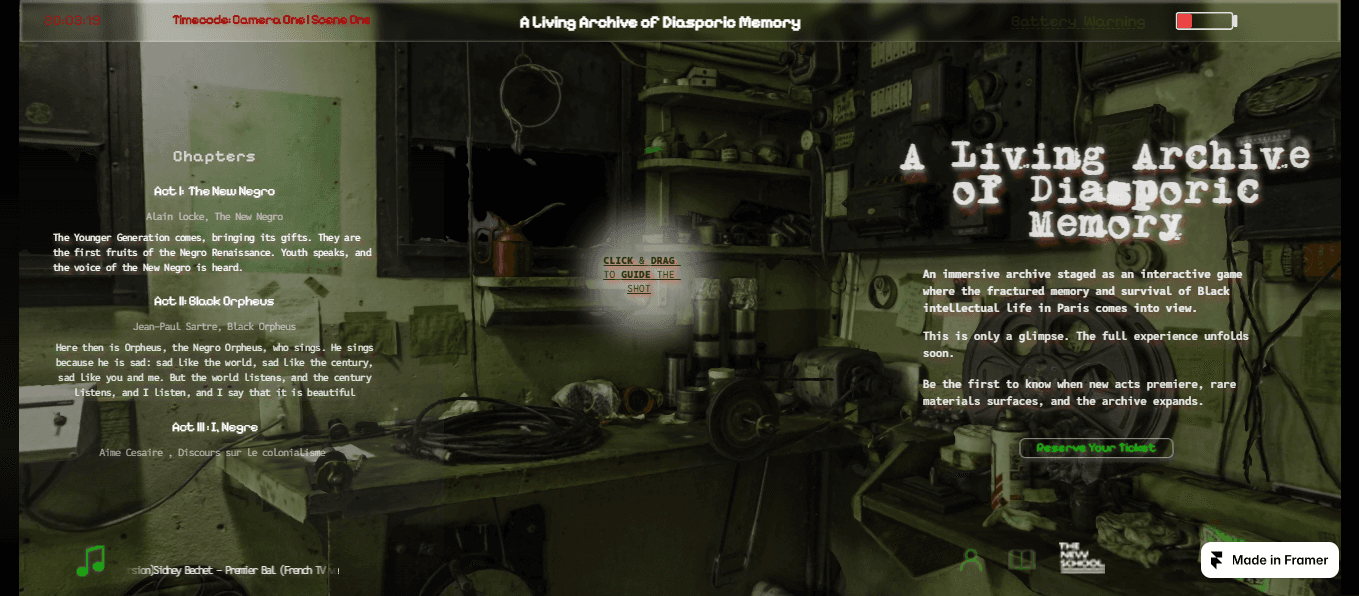
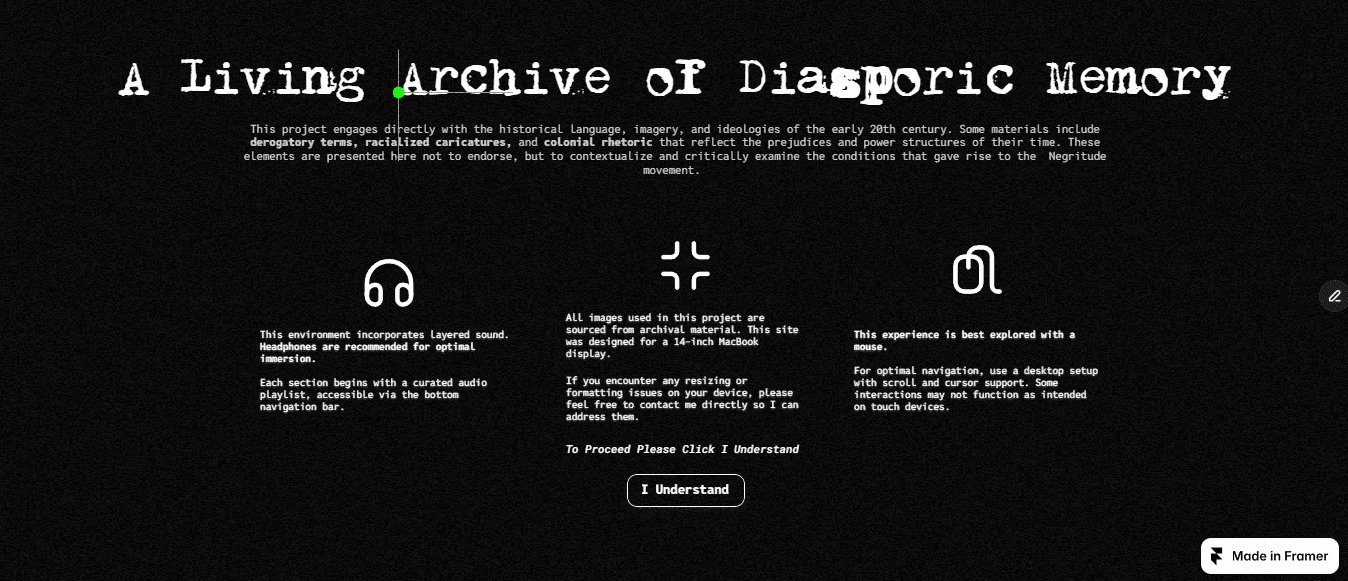
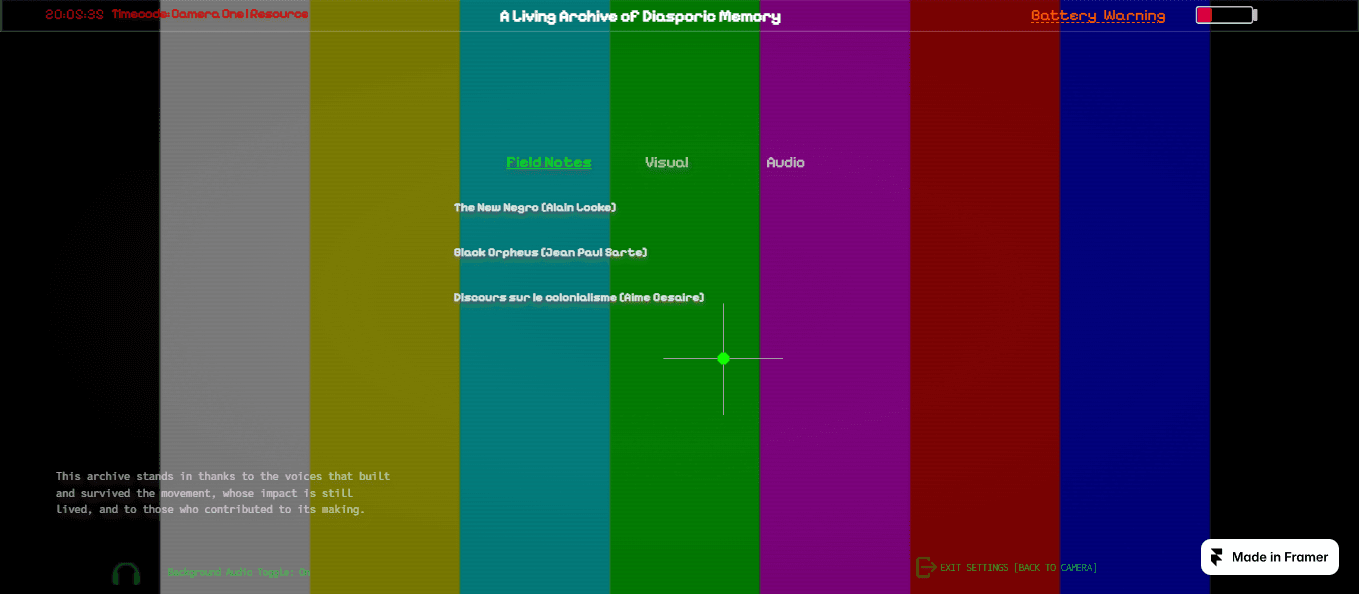
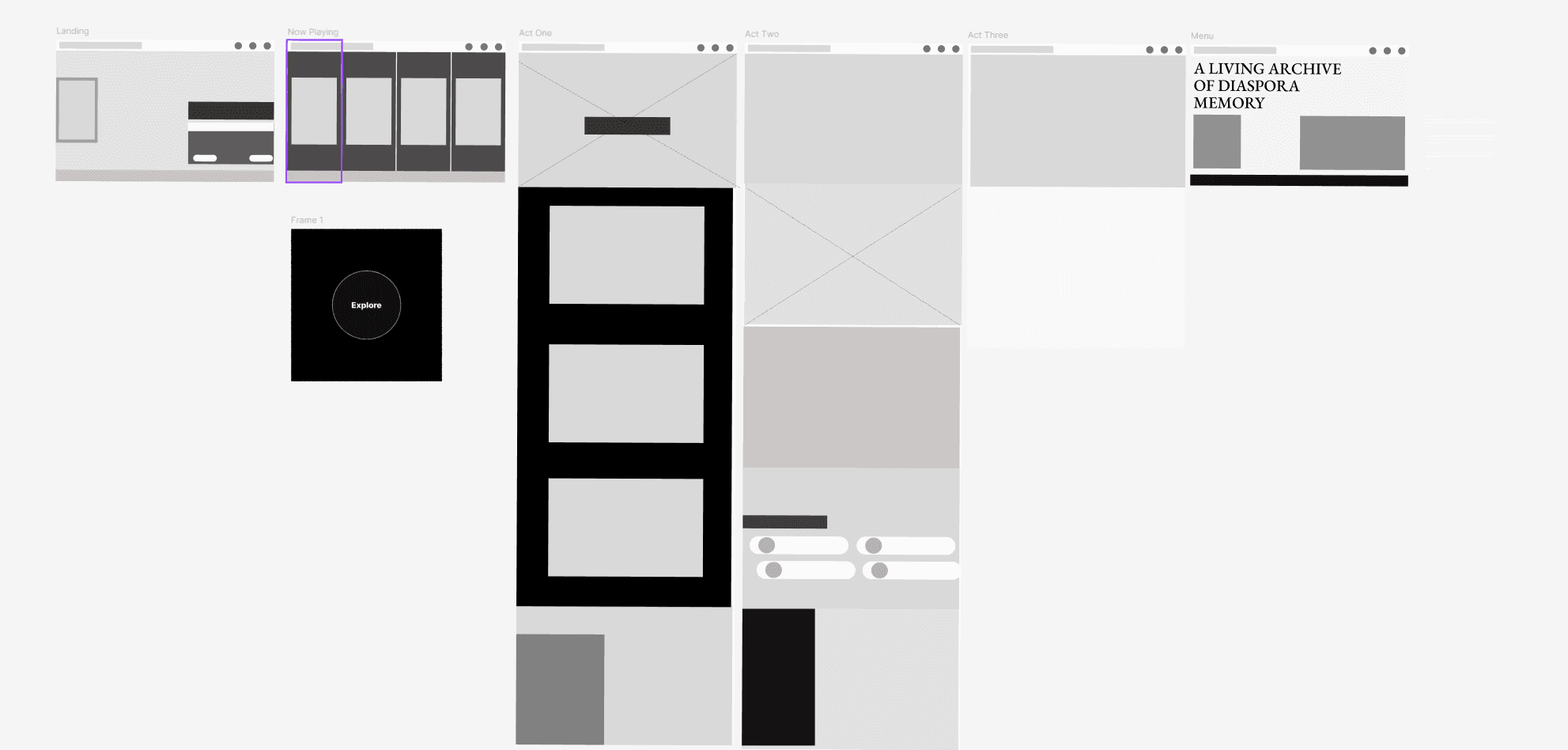
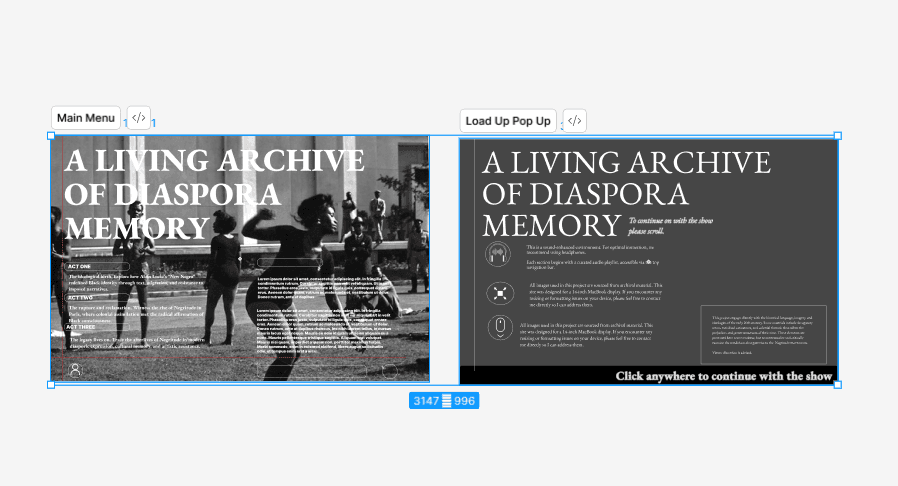
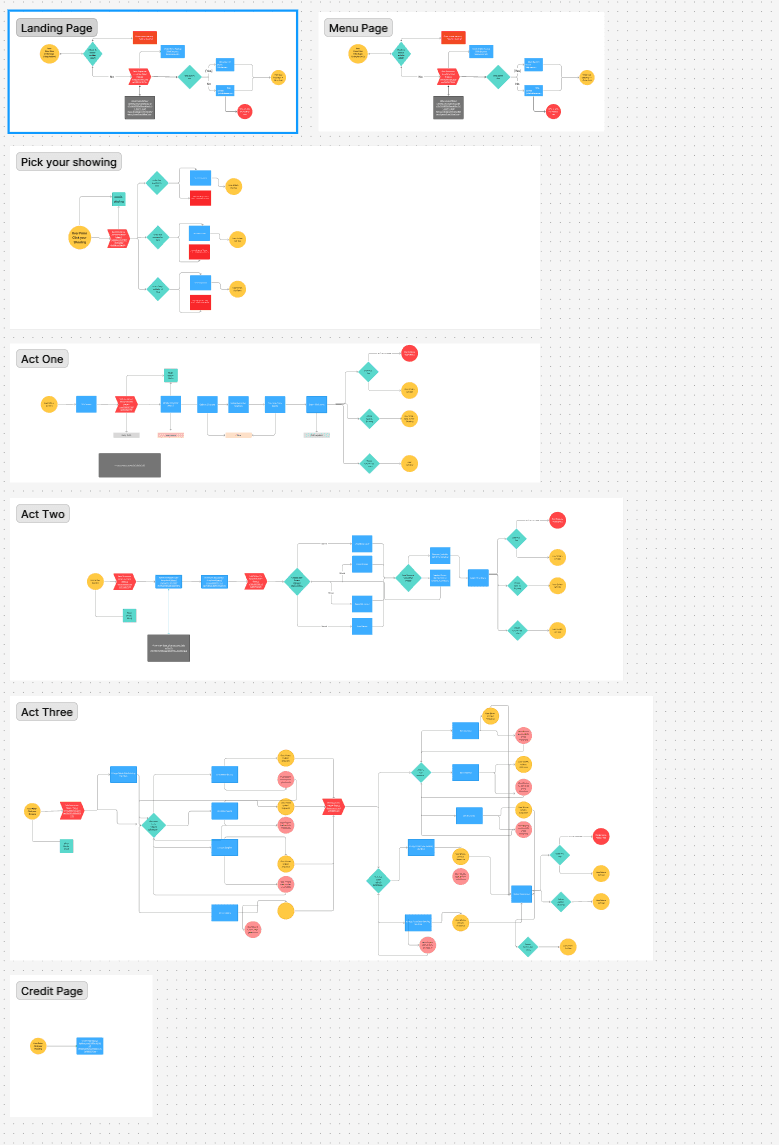
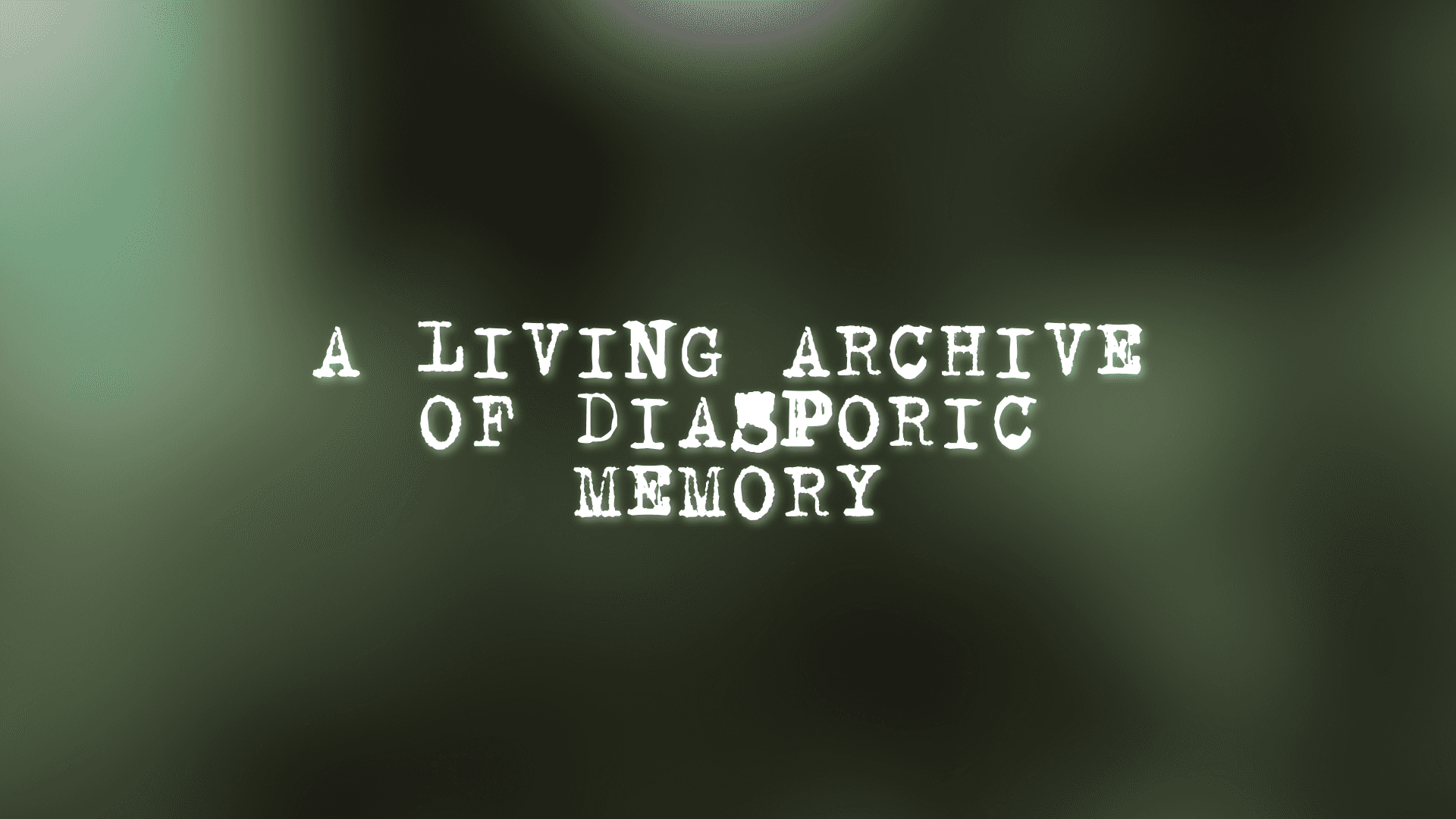
A Living Archive of Diasporic Memory
A Living Archive of Diasporic Memory
Rooted in a self-directed residency in Paris, An Archive of Living Diasporic Memory interrogates how the legacy of Negritude persists within a city that simultaneously cultivated and constrained its formation. Although the voices of Aimé Césaire, Suzanne Césaire, and Léopold Sédar Senghor constitute a foundational corpus in global intellectual history, their presence in contemporary Paris remains fractured, frequently invoked in language but rarely upheld within the cultural and institutional frameworks that shape public memory. Taking this dissonance as a critical point of departure, the research examines how Black intellectual labor is archived, aestheticized, and strategically erased across institutional and public space.
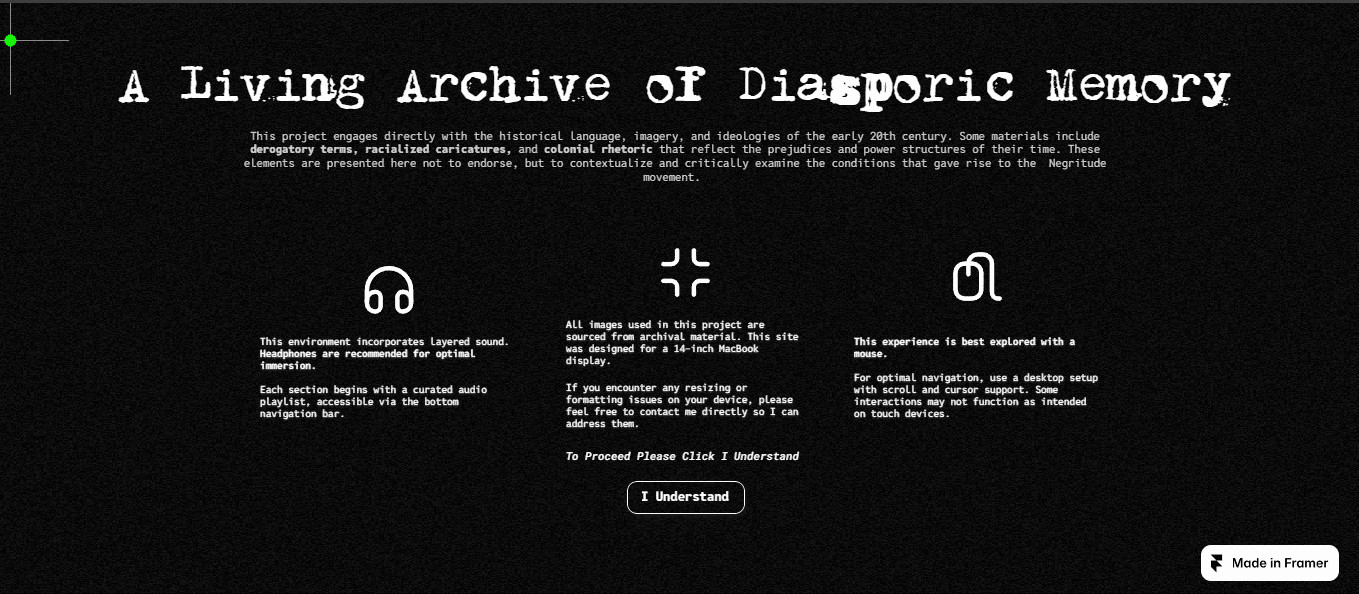

A Living Archive of Diasporic Memory
A Living Archive of Diasporic Memory
Rooted in a self-directed residency in Paris, An Archive of Living Diasporic Memory interrogates how the legacy of Negritude persists within a city that simultaneously cultivated and constrained its formation. Although the voices of Aimé Césaire, Suzanne Césaire, and Léopold Sédar Senghor constitute a foundational corpus in global intellectual history, their presence in contemporary Paris remains fractured, frequently invoked in language but rarely upheld within the cultural and institutional frameworks that shape public memory. Taking this dissonance as a critical point of departure, the research examines how Black intellectual labor is archived, aestheticized, and strategically erased across institutional and public space.